
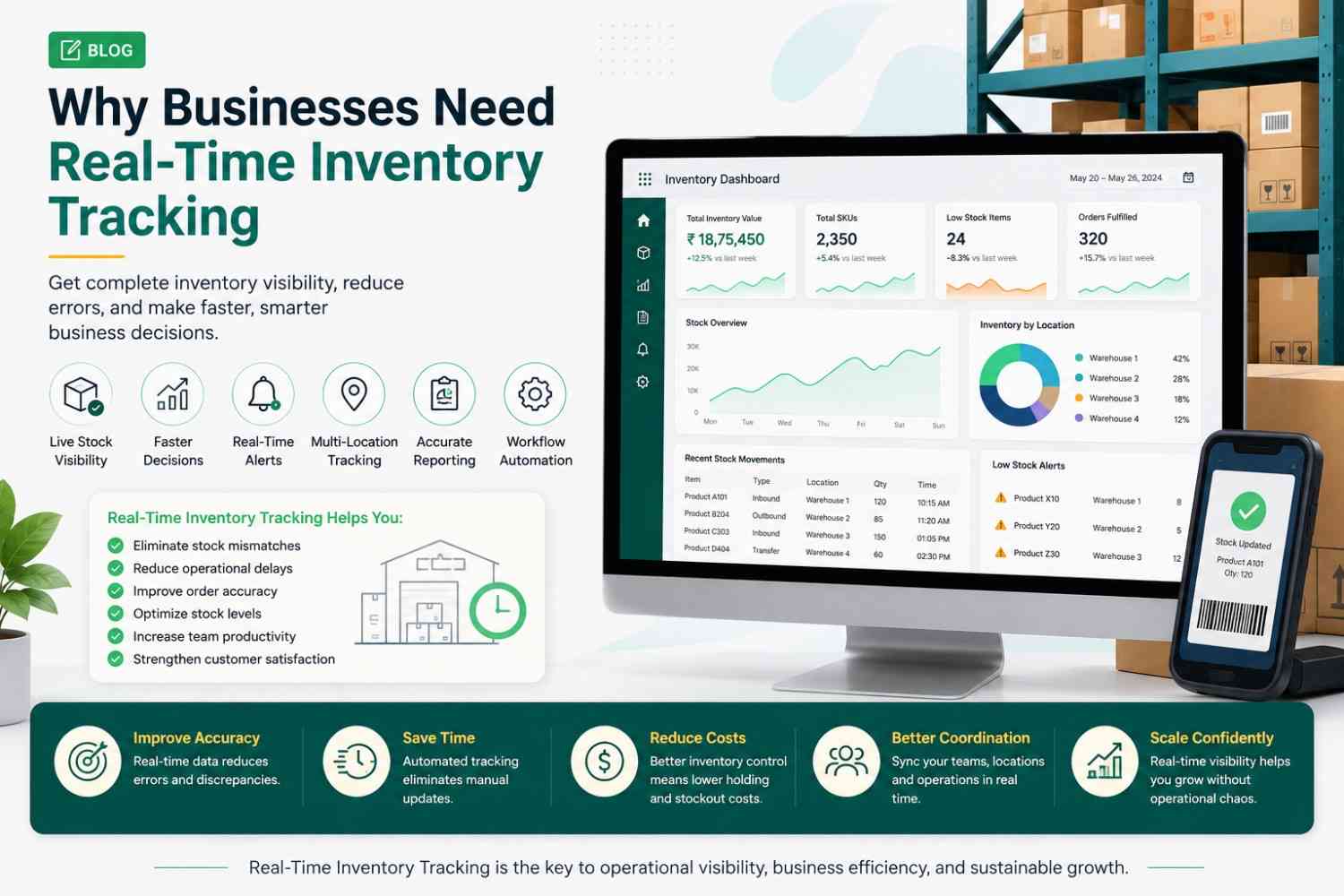
Inventory is the physical manifestation of working capital. Yet, many businesses manage it with tools that only offer a delayed, historical view. For warehouses and distributors, relying on spreadsheets means operating on assumptions, not facts. This lack of visibility bottlenecks everything from fulfillment to financing. The solution isn't just better record-keeping. It's a structural shift toward a connected inventory management system that provides a live, synchronized view of every asset in motion.
It is an operational architecture where every stock movement — receiving, picking, or shipping — is recorded centrally the moment it happens.
Instead of waiting for end-of-day reconciliations, the system maintains a continuous, live state of inventory. This ensures that sales, procurement, and financing partners all base their decisions on identical, current data.
Manual data entry creates systemic vulnerabilities that compound as transaction volume scales:
Making purchasing decisions based on yesterday's data.
Physical counts failing to match system records due to missed entries.
Fragmented data across departments causing operational confusion.
Taking days to assemble inventory valuations for audits or financing.
Implementing a robust inventory tracking system delivers benefits far beyond the warehouse floor:
Automate reordering based on live consumption rates.
Accelerate fulfillment by eliminating time spent searching for misplaced stock.
Provide lenders with the verifiable, real-time asset data needed to approve working capital.
Eliminate the guesswork that leads to overstocking or stockouts.
Modern warehouse inventory software replaces static record-keeping with dynamic, event-driven infrastructure:
Immediate oversight of multiple locations, transit states, and stock levels.
Automatic triggers for low stock alerts or unusual movement patterns.
Digital guardrails that prevent incorrect picks or shipping errors.
Seamlessly connecting inventory data to ERPs and accounting software.
Live feeds provide the transparency financiers need to instantly validate assets and deploy capital without manual audits.
Centralized tracking helps distributors coordinate shipments and accurately allocate thousands of SKUs across regional centers.
3PL providers use real-time data to give clients immediate visibility into receiving status and outbound fulfillment.
Capturing data is only the first step. As an operational software solutions provider, Edquest knows the true value lies in synchronization.
When stock reaches a critical threshold, an automated system doesn't just log it — it generates a purchase order and notifies the supplier via API. This shifts your team's focus from data entry to exception management.
The future of the supply chain belongs to connected ecosystems where suppliers, warehouses, and financing partners share a unified operational context.
Building this intelligence requires a solid foundation: a centralized, API-first inventory management system capable of executing scalable workflows.
A system that updates stock levels instantly as events occur, providing an immediate, accurate view of assets.
Delayed data entry leads to stock mismatches and operational bottlenecks that compound as order volume grows.
Real-time tracking provides lenders with the verifiable, immediate transparency needed to approve working capital.
Automation uses live data to trigger tasks like reordering stock, notifying suppliers, and generating compliance reports.
Inventory is a dynamic operational flow. Managing it effectively requires infrastructure that moves at the speed of your business. A real-time inventory management system isn't just a software upgrade — it's a foundational platform for faster decisions, robust financing validation, and sustainable scale. The operational clarity you need already exists in your data. The challenge is finding the right technology partner to surface it.
Edquest builds custom operational software designed for modern business scale. From complex warehouse integrations to real-time inventory tracking, we deliver the technology infrastructure you need.
Talk to Edquest