
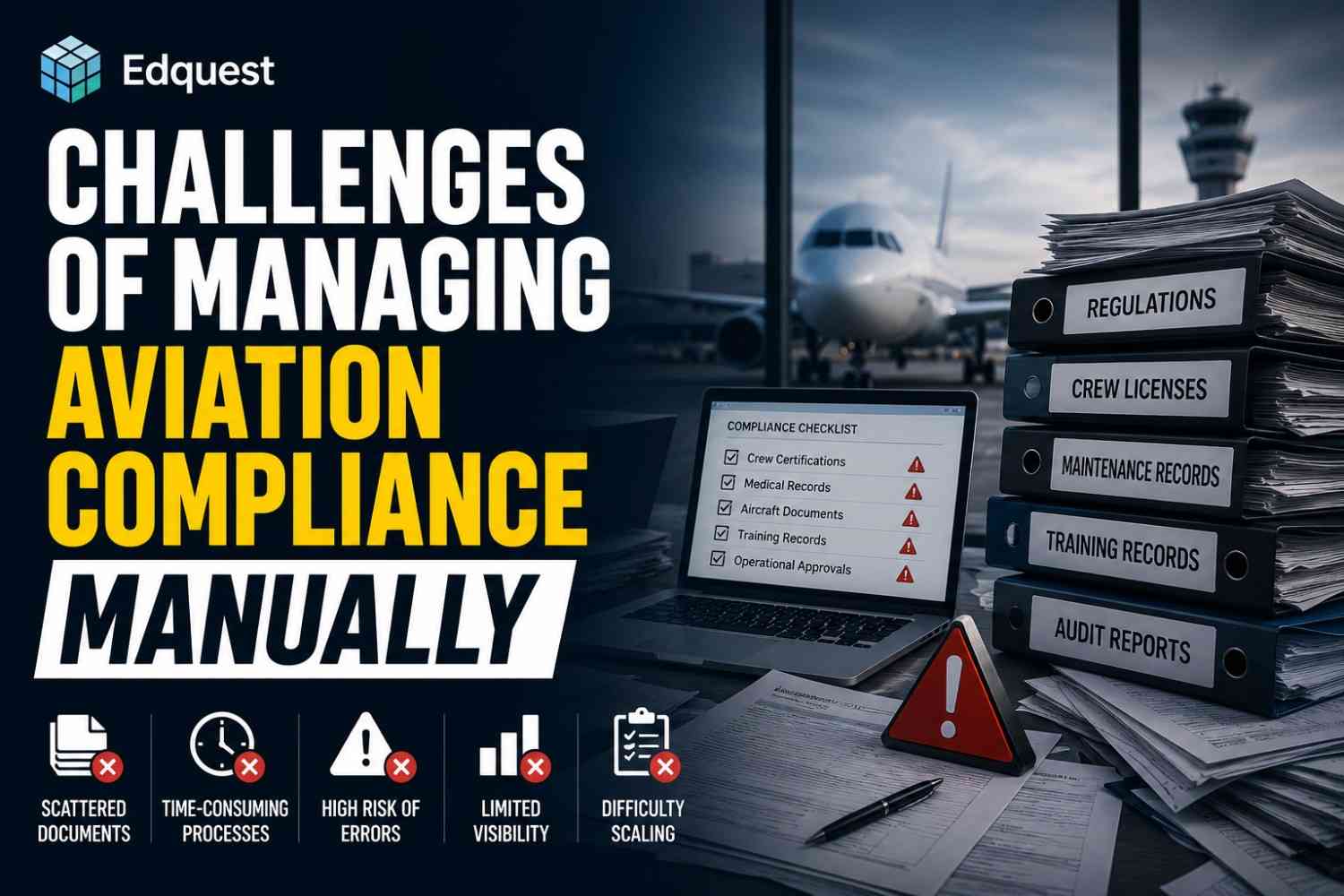
Aviation is one of the most highly regulated industries in the world. From DGCA compliance requirements and crew certifications to aircraft documentation and operational records, aviation operators are expected to maintain accurate, up-to-date, and audit-ready information at all times. Yet many organizations still rely on spreadsheets, emails, paperwork, and disconnected systems to manage critical compliance workflows. While manual processes may work initially, they become increasingly difficult to manage as operations scale. Incorporating an automated Crew Scheduling Software eliminates operational inefficiency, compliance risk, and reduced visibility across aviation workflows.
Aviation operations involve multiple compliance documents. When these records are stored across spreadsheets, folders, emails, or physical files, it becomes difficult to maintain centralized visibility and version control.
This increases the risk of outdated or missing information during audits and operational reviews.
Manual compliance tracking requires teams to continuously perform repetitive tasks that consume significant operational time and reduce overall efficiency:
Manual data entry and document management are prone to errors. Even small mistakes in certification tracking, flight scheduling, or operational reporting can create compliance gaps and operational disruptions.
In aviation, minor compliance oversights can have serious operational consequences.
Without centralized systems, operators often struggle to maintain real-time visibility into critical operational areas:
This makes proactive decision-making difficult and increases operational dependency on manual coordination.
As aviation companies grow, manual workflows become increasingly difficult to manage. More aircraft, crew members, certifications, and operational workflows create additional complexity that spreadsheets and disconnected systems cannot efficiently handle.
Modern aviation operators are increasingly adopting centralized digital platforms to simplify compliance management and operational coordination. These platforms transform compliance management from reactive tracking into proactive operational control.
Modern aviation operations require connected systems that integrate multiple critical functions into a single environment. Unified aviation platforms help operators improve operational efficiency while maintaining better compliance visibility across the organization.
Automate scheduling, track crew availability, and manage duty assignments from a centralized system.
Monitor certification validity, medical records, and regulatory requirements with automated alerts and real-time status visibility.
Secure, centralized storage for all aviation documents with automated expiry tracking and version control.
Streamline day-to-day operations from flight planning to post-flight reporting in a structured digital environment.
Generate accurate compliance and operational reports instantly for internal reviews and regulatory audits.
Manual processes are prone to human error, missed expiry dates, and scattered documentation. In aviation, even small compliance gaps can lead to operational disruptions, regulatory penalties, and safety risks.
DGCA (Directorate General of Civil Aviation) sets the regulatory framework for aviation operations in India. Compliance with DGCA requirements is mandatory for all operators, covering crew certifications, aircraft airworthiness, flight duty limitations, and operational standards.
Digital platforms centralize all compliance data, automate expiry tracking, provide real-time visibility into certification status, and simplify audit preparation — reducing manual effort and minimizing compliance risk.
Absolutely. Even small NSOP operators benefit significantly from centralized compliance tracking. As operations grow, having a structured digital system in place prevents the operational chaos that comes with scaling manual workflows.
Managing aviation compliance manually becomes increasingly challenging as operations scale. Disconnected systems, manual workflows, and scattered documentation create operational inefficiencies and increase compliance risk. By adopting centralized digital aviation platforms, organizations can simplify compliance management, improve operational visibility, and build more scalable aviation operations.
Explore how Edquest's aviation solutions help operators centralize compliance, manage crew operations, and stay audit-ready.
Explore Aviation Solutions